


As you stand on the precipice of an expansive world brimming with jargon, it’s essential to arm yourself with the vernacular of Azeroth. You’ll soon discover that communication is just as vital as the sharpest blade or the most potent spell in World of Warcraft Classic. It’s a landscape where ‘aggro’ can mean the difference between life and death, and not knowing your ‘BiS’ from your ‘BoE’ could leave you a step behind your fellow adventurers. This guide aims to demystify the acronyms, abbreviations, and gamer speak that’ll be your bread and butter as you navigate through quests, raids, and the social intricacies of guild life. Stay a while, and listen—uncover the meanings behind the cryptic chatter that buzzes through the trade channels, and equip yourself to join the ranks of those who speak the tongue of Azeroth fluently.
Essential Gold Farming Techniques
Mastering gold farming techniques in WoW Classic can significantly enhance your gameplay, letting you afford the gear and items you’ll need for your adventures. As you dive into the world created by Blizzard Entertainment, you’ll quickly realize that acquiring game currency is vital. This famed online game is more than just a role-playing game; it’s an economy in itself.

One of the essential gold farming techniques involves dungeon runs such as Orb Runs in Strat Live, where you can bag sellable Righteous Orbs. Or perhaps you’d prefer Jump Runs in Dire Maul East, teaming up with a fury warrior and restoration shaman to skip trash and head straight for the loot. You might even arrange runs where sellables are reserved, offering your tank or heal services in exchange for game items dropped during the run.
Don’t overlook Maraudon for its profitable variants, or Zul’Gurub, where treasures await those who know their way around. Remember, in WoW Classic, your ability to grind for gold will set you apart, granting you the means to purchase that epic mount or the enchantments you’ve been eyeing. So, sharpen your skills, and you’ll watch your coin pouch grow.
Key Dungeon Abbreviations
In the labyrinthine world of WoW Classic, dungeons like BRD (Blackrock Depths), LBRS (Lower Blackrock Spire), and UBRS (Upper Blackrock Spire) are known by acronyms to speed up communication. As you delve into this realm, you’ll quickly learn that every second counts, and using these shorthand terms can be the difference between forging a successful raid party and being left behind in the capital cities.
Here’s a quick rundown of some common terms you’ll encounter:
- SM/Cath: Refers to Scarlet Monastery’s Cathedral wing
- Strat UD: Stratholme’s Undead side
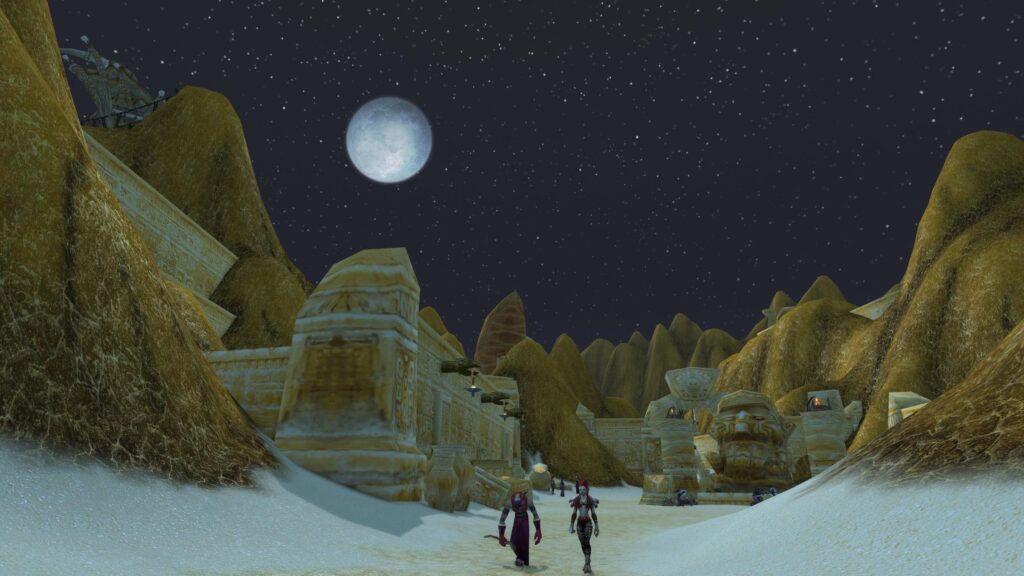
- ZF: Zul’Farrak
When you’re navigating through Azeroth, remember that these abbreviations aren’t just slang; they’re a language that connects you to other players. Non-player characters (NPCs) and non-playable characters (also NPCs) might offer quests that lead you to these dungeons, but it’s your fellow game characters—the real heroes beside you—who will be using these terms.
Warlock Specialization Terms
As a warlock in WoW Classic, you’ll need to choose a specialization that best suits your playstyle, whether it’s for dominating in PvP battles or optimizing your role in PvE encounters. Each spec has its own set of terms you should get familiar with to maximize your character’s potential.
SM/Ruin, shorthand for Shadow Mastery/Ruin, is a popular PvE build that focuses on enhancing your Shadow Bolt’s damage. It’s ideal for those of you who enjoy casting from the back lines and melting bosses with a relentless barrage of Shadow Bolts.
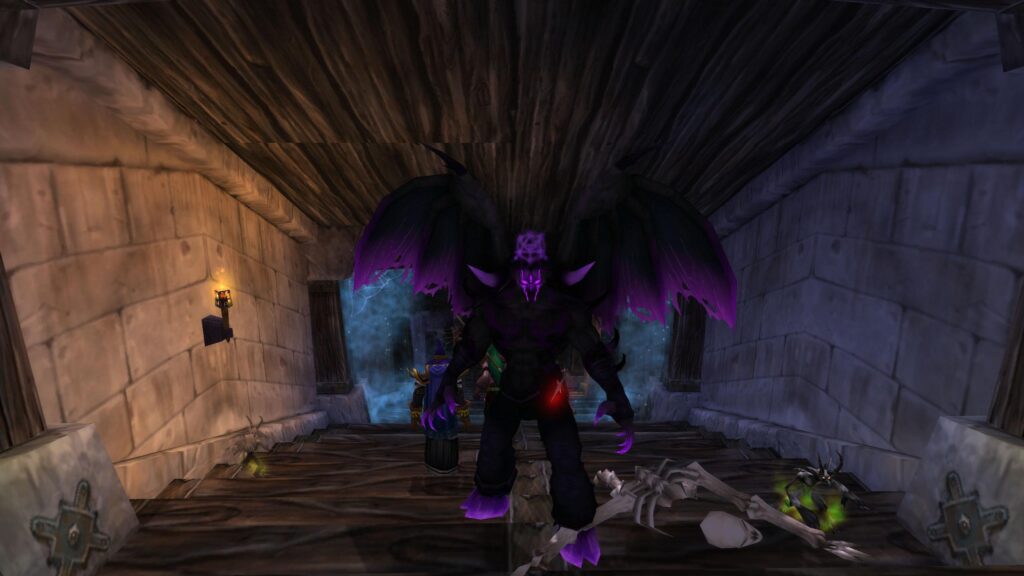
For a different flavor, there’s DS/Ruin, which stands for Demonic Sacrifice/Ruin. Here, you’ll sacrifice your Succubus to gain a significant boost to your Shadow damage, again, focusing on Shadow Bolt spam. It’s a great choice if you’re into the idea of empowering yourself through your demonic companions.
In the realm of PvP, NF/SL, meaning Nightfall/Soul Link, could be your go-to. This spec capitalizes on the chance to instant cast Shadow Bolts with Nightfall procs while using Soul Link to increase your survivability.
Lastly, NF/Conflag, combining Nightfall and Conflagrate, offers a burst-centric PvP playstyle. It’s perfect if you’re after that sudden explosive damage to catch opponents off guard.
Understanding Raiding Terminology
To excel at raiding in WoW Classic, you’ll need to grasp the specific terminology used by veterans to streamline communication and loot distribution. Diving into a raid without understanding these terms can lead to confusion and missed opportunities to snag some epic gear for your character. So let’s break down a few key phrases:
- MT and OT: Main Tank and Off Tank, respectively. The MT is the primary focus for the boss’s aggression, while the OT steps in for certain mechanics or to pick up additional enemies.
- Wipe: This is when the entire raid group dies, and it’s back to the drawing board. It’s a learning experience, and you’ll likely hear “wipe it up” when a fight has gone south.
- Buffs and Debuffs: Buffs are positive effects applied to players, like Paladin’s Blessings or a Druid’s Mark of the Wild. Debuffs are the harmful effects on either players or enemies that can affect the outcome of a fight.
Common Points of Contention
While understanding raiding terminology is crucial for seamless gameplay, you’ll also encounter heated debates over practices like loot trading and the use of sharding within the WoW Classic community. Loot trading, which allows you to swap soulbound items within your group, sounds fair in theory. Yet, in practice, it’s often a bone of contention. Some players argue it undermines the spirit of competition, while others say it’s essential for a cooperative team dynamic.
Then there’s sharding. Designed to reduce resource contention by splitting the population into multiple instances of the same zone, it’s a modern solution to classic problems. Purists, however, feel it dilutes the MMO experience, breaking the sense of a unified world. You’ll need to navigate these waters carefully; what’s considered fair play by some is seen as exploitation by others.
Don’t forget about the term ‘Blizzlike.’ This buzzword refers to servers aiming to replicate the original WoW experience as closely as possible. It’s a hot topic, with many arguing over what constitutes a truly authentic experience. Keep these debates in mind as you dive into WoW Classic; they’re as much a part of the game as the quests and the raid bosses.
Conclusion
Now you’re armed with the lingo to venture forth in Azeroth, savvy in the ways of gold farming and dungeon diving. Whether you’re a warlock weighing SM/Ruin against NF/Conflag or a raider tangled in the DKP or GDKP debate, you’re ready to parley with the pros. Remember, in the World of Warcraft Classic, knowledge is as mighty as the mightiest sword. So go forth, champion—your epic saga awaits! And, oh, don’t forget to BYOB—Bring Your Own Battleaxe!